
Boxers in the Warsaw Uprising: Three Who Never Returned from the Fighting
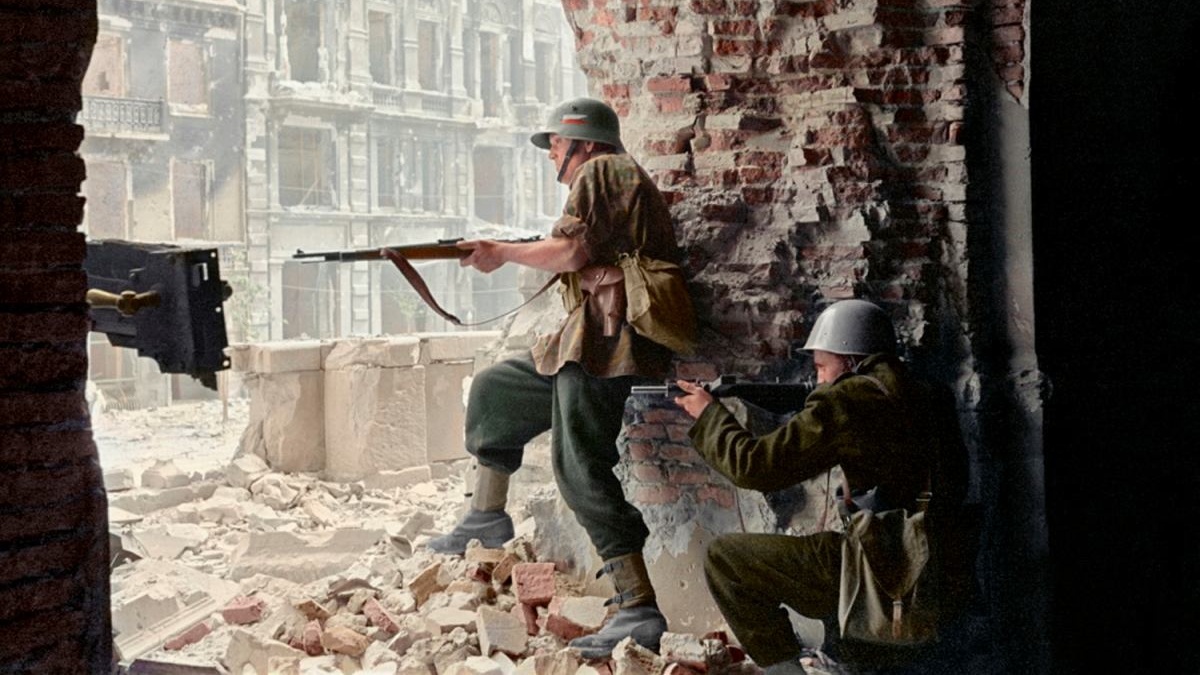
From 1 August 1944, among the insurgents, they were known as “Miecio,” “Docha” and “Neger.” Three acquaintances from before the war, fellow boxers from the capital’s rings, probably never met even once during the Warsaw Uprising. They were among Warsaw’s children who did not return alive from the 63 days of fighting. This text is a tribute to all the heroes who fell at that time.
I invite you to read on.
Sergeant officer cadet “Miecio” was an officer in the 2nd Security Platoon of the elite “Chwaty” Group, commanded by Lieutenant Stefan Berent (codename “Steb”). His subunit was tactically attached to the Information and Propaganda Bureau of the Home Army High Command. “Miecio’s” duties included taking part in armed, sabotage and diversionary actions. In the following days of the uprising, he also participated in special loudspeaker patrols.
At the beginning of September 1944, “Miecio” defended Kuczyński’s confectionery, located at the junction of Krucza Street and Jerusalem Avenue. He also fought for his post at the corner of Wiejska and Frascati streets. On 13 September, he fell while defending a tenement building near the Pension Fund building of the Bank Gospodarstwa Krajowego, at the corner of Frascati and Konopnicka streets.
Assembly of the 2nd Platoon of the “Chwaty” Security Unit of the WZW in the courtyard of a house on Bowdena Street.
“Docha”—a codename derived from the surname of a well-known prewar “Legia” motorcycle racer—held the rank of platoon sergeant officer cadet on the day the uprising broke out. He initially fought in the Powązki area. On the command’s orders, he subsequently withdrew to the Kampinos Forest.
Several days later, commanding a 200-man unit, he broke through to Lower Żoliborz. There he fought alongside insurgents from the “Żbik” Group, commanded by Captain Witold Plechowski (codename “Sławomir”). On 14 September, while defending a barricade on Dziennikarska Street, he disabled a German “Panther” tank by throwing bottles filled with petrol at it.
Six days later, he was sent to defend the insurgent hospital housed in the Convent of the Sisters of the Resurrection, known as the Resurrection Sisters’ Fortress. “Docha’s” unit arrived almost at the last moment. Hand-to-hand fighting broke out, after which the Germans were driven back.
According to surviving accounts, on 30 September “Docha” took part in an unsuccessful assault on the flood embankment. He later fought at Inwalidów Square, where he was wounded. One of the German soldiers recognized him; before the war, the two had competed against each other in boxing contests. “Docha” was taken to a hospital in Tworki. He died there from his wounds.
The participation of the third of our heroes in the insurgent fighting was curtailed by a serious injury he had sustained in February 1944. “Neger” was wounded in the abdomen during one of the diversionary operations in Wola. His life was saved by a miracle. His brother and his prewar boxing friends, among them Piotr “Klimek” Mizerski, were of particular help, donating blood for transfusions.
In the first days of the uprising, “Neger,” serving with the 21st Company of the “Narew” Home Army Battalion, took part in the fighting in Czerniaków. Wounded in the leg, he was taken to a hospital on Czerniakowska Street. On 18 September, after the Germans seized the facility, he and the other wounded were evacuated under SS escort. The column marched along Górnośląska and Rozbrat streets toward Szucha Avenue.
After several selections, the wounded were forced to march through Unii Lubelskiej Square and along Rakowiecka Street toward Narutowicz Square. “Neger,” staggering on his feet, asked the Germans on behalf of the others to slow the pace. One of the SS men ordered him to step out of the line. Moments later, he was killed by a shot to the back of the head.
Insurgents from the “Chwaty” unit leave their positions after capturing Holy Cross Church and the police headquarters.
The Heroes of the Story
“Miecio”—Mieczysław Całka (born 1917) boxed in the welterweight division before the war. He represented the colors of the works clubs RKS Elektryczność Warszawa and Centralne Warsztaty Samochodowe, or CWS Warszawa. In 1939, he fought a very close bout against Antoni Kolczyński. He lost after a controversial decision.
After the outbreak of World War II, he was mobilized and took part in the September Campaign. He was wounded on 13 September. He removed his uniform to avoid captivity and soon began underground activities. He first belonged to the Union for the Reconstruction of the Republic of Poland, and in 1943 joined the Home Army. During the occupation, he completed an underground officer-cadet course.
“Docha”—Henryk Doroba (born 1915) was a mainstay of Warsaw “Legia’s” boxing section before the outbreak of the war. Among other achievements, he won several capital-city championship titles. In 1937, he was considered one of the country’s leading welterweights. His record included victories over Antoni Kolczyński, Józef Fabisiak and Henryk Całka.
As a participant in the September Campaign, he was taken prisoner near Tarnów. He escaped quickly and made his way to occupied Warsaw, where he began fighting in the underground.
“Neger”—Eugeniusz Cendrowski (born 1909) was associated with KS “Polonia” Warszawa’s boxing section before the war. He began his career at the YMCA and later competed for the factory club Forty Bema. As an instructor and coach, as well as the permanent second of the Warsaw representative team, he coached, among others, Antoni Kolczyński for a time.
From 1936, Cendrowski worked on the coaching staff of the Polish Boxing Association’s Olympic team. He took part in the September Campaign. After his unit was defeated, he was taken prisoner by the Germans, but escaped while being transported to a prisoner-of-war camp. He returned to Warsaw and eventually became a member of the Union of Armed Struggle and the Home Army.
My dear friends, let us remember—not only on anniversaries—the people from the boxing community who gave their lives fighting for the independence of their homeland. It is worth encouraging Warsaw’s supporters, and not only them, to visit Powązki Cemetery and light memorial candles. Like “Legia” fans, we can also take care of the graves of the insurgents. We who draw joy from living in freedom simply owe these people our remembrance.


