
Young Perez: The World Champion Murdered on a Death March
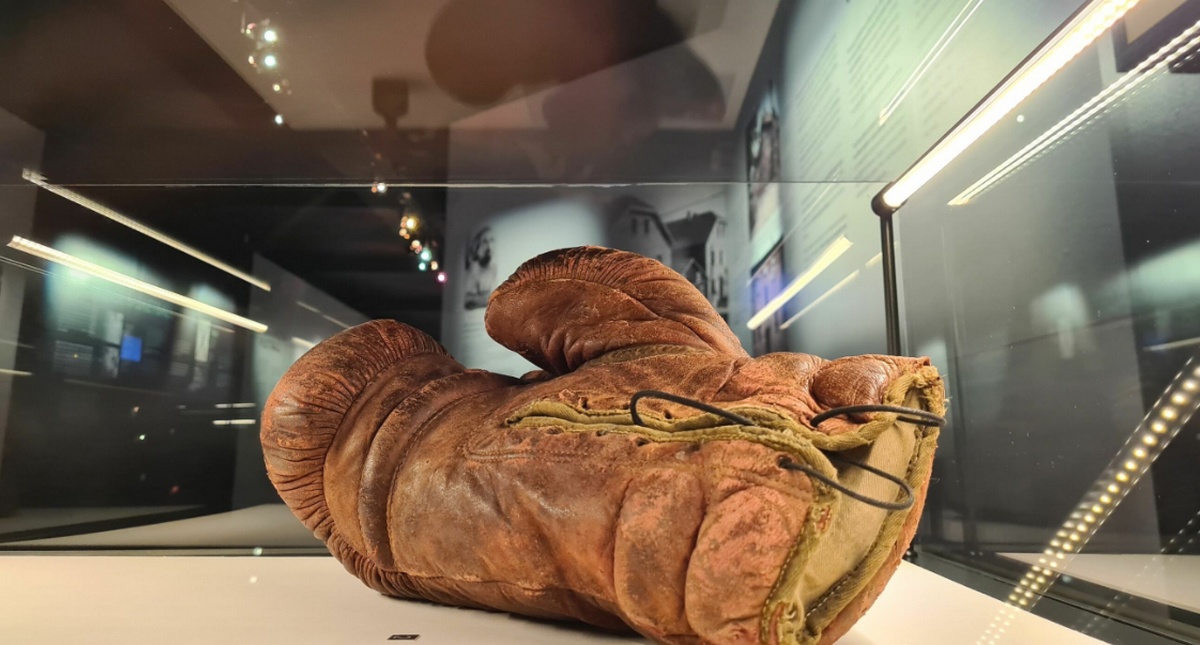
I have saved for last the story of one of the greatest boxers whom World War II took from the sporting world. There is no doubt that thousands of prisoners, including hundreds of former amateur and professional boxers, fell victim to the camp boxing matches. Among them was former professional flyweight world champion Victor "Young" Perez, a prisoner at Auschwitz-Birkenau from 1943 to 1945. Perez left behind more than the memory of a fighter struggling for his own life. He bore witness to helping others, regardless of the circumstances or the cost.
Victor "Young" Perez was born on January 15, 1911, in Hara, the Jewish quarter of Tunis, which was then a French colony. He was the sixth child of a poor traveling merchant. In April 1924, he decided to become a boxer and abandoned his education. His great idol at the time was the Senegalese fighter Battling Siki. Hoping to match his fame, he and his brother Benjamin "Kid" Perez joined the boxing section of Maccabi Tunis.
At the age of 16, he took the risk of moving to Paris. He initially worked there as a shoe salesman, training at the Alhambra after hours. It was there that he met Leon Belliere, who would become his manager. In 1928, he signed a professional contract with him. Two years later, he received his first opportunity to win the French professional title. He lost by fourth-round TKO, however, to Kid Oliva, a Marseille native of Italian descent. A year later, he won the national belt. After 15 rounds, he defeated the brilliant Valentin Angelmann on points.
Belliere and Perez, the first two from the left
Perez’s career reached its peak on October 26, 1931. At just 20 years of age, he won the NBA and IBU flyweight world titles. He defeated American Frankie Genaro. A crowd of 16,000 at Paris’s Palais des Sports applauded Perez’s magnificent triumph. Victor needed just five minutes of fighting to win the belt. He thus became the youngest French professional world champion.
When he returned to his native Tunis in the glory of a champion, he was greeted by a banner reading: "Glory to our world champion, Young Perez." Ten thousand friends and fans cheered him at the port. He became a public figure. Parisians loved him, especially Parisian women. One of them was the famous Catholic actress Mireille Balin, who was his partner for a time. He was also respected in Tunis. Although he stayed with his family in the Jewish quarter, he had many Muslim and Catholic friends.
Unfortunately, in his first defense of the world title, on October 31, 1932, Perez lost by 13th-round TKO in Manchester to the outstanding Englishman Jack Brown. Two years later, he tried to return to the top, this time as a bantamweight. The reigning IBU world champion, Panama Al Brown, proved too difficult an obstacle, however, and knocked Perez out in the 10th round. Victor fought 133 professional bouts in all. His record stood at 90 wins, 28 losses and 15 draws, including 27 victories by knockout. He entered the ring for the final time on December 7, 1938.
During the German occupation of France, after the Vichy regime came to power, he was forced into hiding. On September 21, 1943, following a denunciation, he was arrested by the French militia and interned at the camp in Drancy. In November 1943, in the infamous 60th convoy, he was deported along with a thousand French Jews to the concentration camp at Oświęcim.
He was sent to KL Auschwitz III-Monowitz (Buna-Werke). He worked in the kitchen of a synthetic rubber factory alongside other well-known French athletes, including Primo Levi and Alfred Nakache. The camp commandant, a boxing enthusiast, knew of Victor’s sporting achievements. He forced him to fight a kapo, a German heavyweight boxer before the war.
The bout did not take place in a ring, but on the roll-call square. SS men and prisoners watched it. Perez stood just 155 centimeters tall and weighed approximately 40 kilograms. His opponent was several heads taller and nearly 50 kilograms heavier. Despite this, Victor won by knockout. From that moment on, he became the commandant’s favorite, and was forced to box twice a week. Over the next 15 months, the diminutive Frenchman fought approximately 140 victorious bouts. Each victory brought him three benefits: another day of life, a day off from kitchen work and an extra bowl of soup.
Prisoners of KL Auschwitz III-Monowitz at work
His fellow prisoners also remembered Perez for another reason. While working in the kitchen, he stole food rations for French and North African prisoners for many months. He did it so boldly that friends warned him he would be caught. His answer was invariably: "We were all created to help others."
In January 1945, he was one of 51 surviving prisoners from Drancy. He took part in the evacuation death march. On January 21 or 22 — according to another version, on February 4, 1945 — the starving and freezing prisoners reached an abandoned labor camp near Gliwice. Perez found a large sack of bread in the kitchen. As he left, he threw it to his fellow prisoners.
A hungry guard who saw this ordered him to stand immediately beside a roadside ditch. He aimed a machine gun at him and ordered Victor to take the bread away from the prisoners and bring it to the escorting guards. "I can’t do that! They are my friends. They are very hungry!" Perez shouted.
He did not respond to the guard’s further threats. At a certain point, the sound of several shots rang out. The bullets struck the former world champion. He fell into the snow, where he was left — like so many others before and after him — without burial. Approximately 20,000 prisoners died on the death march.
Perez’s memory remains alive in both France and Tunisia, even though the latter is a Muslim country. The previous year, director Steve Suissa made a film about his life and death. The boxer was portrayed by Nicolas Cazalé. The film draws on a book by Andre Nahum, published in Paris in 2002 and titled "Quatre boules de cuir ou l'étrange destin de Young Perez, champion du monde de boxe".
During research at the Yad Vashem Institute in Jerusalem, I found several documents known as "Pages of Testimony." They confirm Victor Perez’s death on Polish soil. Above, I include a copy of one of these testimonies, submitted to Yad Vashem by Simon Belaish, the son of the boxer’s friend.


