
Teddy Pietrzykowski – the Boxer from the Concentration Camps
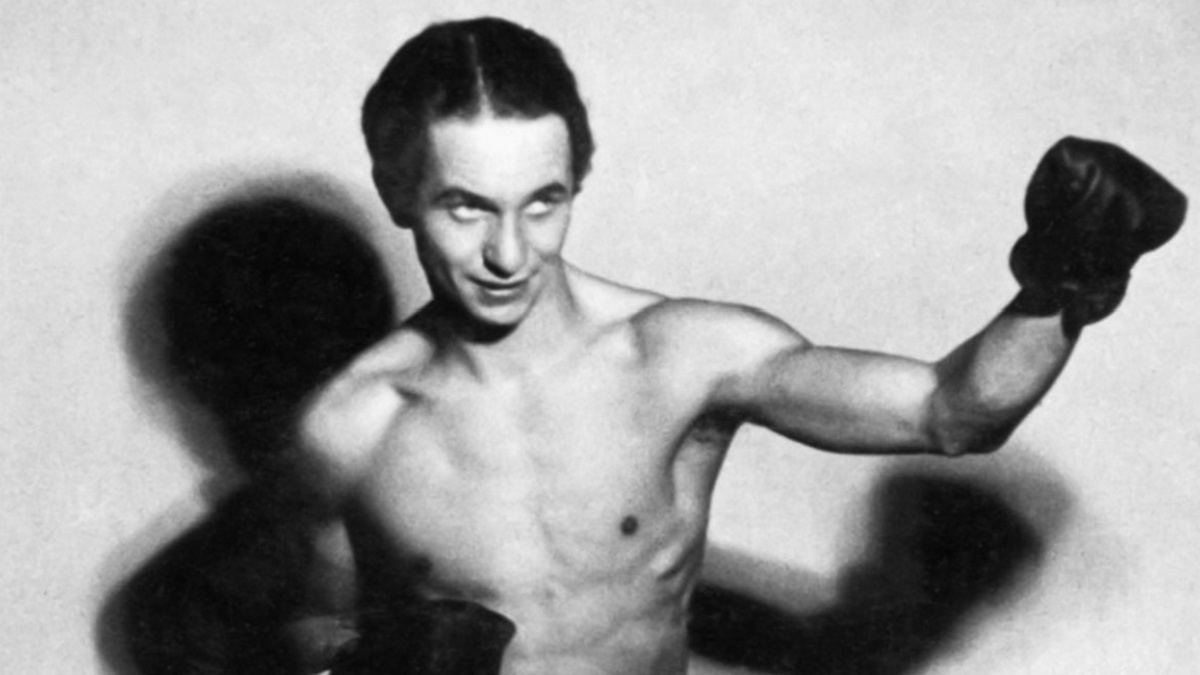
Boxing matches fought by prisoners behind the barbed wire of Nazi concentration camps were not an unusual phenomenon. We wrote about them in May this year on the occasion of the death of Salamo Arouch, the best-known participant in the camp bouts. The Auschwitz prisoner fought as many as 208 matches there. In a series of articles, we want to recall the stories of boxers for whom boxing behind the barbed wire often simply meant a fight for survival.
The best-known Polish camp boxer was Tadeusz Pietrzykowski. He was born in Warsaw in 1917. He did not begin training in boxing until he was 16. He soon joined Legia, where he was taken under the wing of Feliks Stamm himself. He chose sport and abandoned his studies at the Batory Gymnasium. Five years later, in 1938, the influential sports newspaper “Przegląd Sportowy” named Teddy—the Polish bantamweight runner-up—the best boxer in Warsaw in his division.
Salamo Arouch
After the outbreak of World War II, Pietrzykowski wanted to reach France to fight the Germans in the Polish Army being formed there. In February 1940, he traveled to Zakopane. From there, he planned to head west via the Balkans. However, he was arrested at the Hungarian-Yugoslav border. He was sent back to Poland. By court order, he was imprisoned in Nowy Sącz and then, via Tarnów, deported to Auschwitz on June 14, 1940. He was among the camp’s first prisoners. His low prisoner number—77—was evidence of this.
Tadeusz “Teddy” Pietrzykowski in 1937
Pietrzykowski’s camp ordeal began at the end of March 1941. That was when Walter Dünning, a prewar German professional middleweight champion, arrived at Auschwitz. He became a kapo in the camp and abused weaker prisoners. It was Dünning who came up with the idea of staging boxing entertainment in Auschwitz.
Polish prisoners persuaded Teddy to fight the exceptionally brutal kapo. They admired his ability to withstand the blows inflicted by the camp tormentors. The German functionaries quickly seized on the idea. The stakes in the bout were half a loaf of bread and a pat of margarine. They were convinced they already knew the winner. Pietrzykowski weighed 45 kilograms at the time, while his opponent weighed around 70.
“Near the corner of the camp kitchen, the prisoners formed a square. In the middle was the ‘ring.’ Dünning stood there wearing padded mitts. He was blond, superbly built, with powerful muscles, tiny eyes and battered eyebrows. There were no boxing gloves in the camp yet, only padded mitts. I was given a pair and put them on. All around me I heard warnings, accompanied by taps on people’s heads: ‘You fool, he’ll kill you, he’ll eat you.’ There was no time to think, however. One obsessive thought accompanied me: they give you bread for fighting. I was hungry.
Dünning extended his hand, and we took our boxing stances. The fight began. My earlier career flashed through my mind: the figure of Coach Stamm, my first and last fight. I knew one thing—I had to win. I do not know which of us was the better boxer. There are moments, however, when the impossible becomes reality.
When Walter came at me with his hands lowered, I hit him with a left jab. I doubled it, then did it again. Dünning waved me away like a fly. Later, I countered with a right to the jaw. The punch landed, and Walter’s head snapped back. That was how the first round passed. The bell was replaced by a blow on the bell in the roll-call square.
Walter came forward again, this time more energetically. I had to use all my technical skills to avoid walking into his punches. I landed several left jabs, then a right straight and a left hook. To my surprise, the punch landed and Walter failed to avoid it. Whether his nose or his lip was damaged, in any case blood appeared beneath his nose, above his upper lip,” Teddy recalled years later.
Dünning conceded the fight. Pietrzykowski won the coveted bread and became known throughout the camp virtually overnight. From the following Sunday onward, boxing bouts were organized there regularly. The opponents included accomplished boxers, common thugs, prisoners and members of the camp guard personnel.
In 1941 and 1942, the fights took place in Block 2, in the bathhouse and in the square beside the kitchen. The men fought in a makeshift ring built by the camp carpenters. Later, a professional ring with ropes was installed at Auschwitz, and the bouts were officiated by referees.
In the summer of 1942, Pietrzykowski suffered his first defeat. He was beaten by Leu Sanders, the prewar Dutch welterweight champion. Three weeks later, Teddy took his revenge. He won in the third round by technical knockout. During the three years he spent in Auschwitz, he fought more than forty bouts. He won most of them.
The archives of the camp museum contain, among other things, a secret note Pietrzykowski sent to his mother: “Today I am the KL Auschwitz heavyweight champion after victories over Janowczyk, Dexponko and others. Yes, Mother dear, I received ten loaves of bread and ten pats of margarine for it. I gave them to the poor at Christmas, so they could have some too. You see, boxing came in handy.”
In 1943, Pietrzykowski was transported to the camp at Neuengamme. The selection of prisoners being taken from Oświęcim was conducted personally by Lagerführer Hans Lütkemeyer. Teddy already knew him from 1938, when Lütkemeyer had been one of the judges at an international boxing tournament in Poznań. After the competition, they talked at a banquet and exchanged mementos.
At Neuengamme, Pietrzykowski continued his camp boxing career. He fought around twenty bouts. In one of them, he defeated Schally Hottenbach, a 96-kilogram German prewar professional—a true colossus. In his final bout, held shortly after leaving the hospital, he defeated the Russian soldier Kostia Konstantinov.
Liberation found him in Bergen-Belsen. After the war, Pietrzykowski joined General Stanisław Maczek’s 1st Armoured Division. He organized sports activities there and, in 1946, won the division’s lightweight championship.
Unfortunately, Teddy was unable to find his place after the war. He dreamed of returning to the ring in Legia’s colors. However, poor health thwarted those plans.
If you would like to learn more about Teddy Pietrzykowski’s story, it is worth seeking out the book by Joanna Cieślak and Antoni Molenda, “Tadeusz Pietrzykowski Teddy (1917–1991)”, published in Katowice in 1995. The website of the Auschwitz-Birkenau Memorial and Museum is also a valuable source of information. Those interested may also wish to read Józef Hen’s novella “The Boxer and Death”. In 1962, Slovak director Peter Solan made a feature film of the same title based on it.


